
Mayfair’s Stone Stories: A Walking Tour of Architectural Styles
Mayfair, a district synonymous with luxury, also offers a captivating journey through architectural history, where Mayfair’s stone stories unfold through its grand designs and evolving styles. Its streets showcase a remarkable evolution of styles. This walking tour guides you through Mayfair’s grand designs. Discover the architectural significance of its iconic buildings.
Bond Street: Georgian Grandeur and Retail Elegance
Firstly, begin your tour on Bond Street. It showcases Georgian grandeur. Early 18th-century developments featured elegant brick townhouses. Furthermore, these buildings often had symmetrical facades. They also included sash windows. Later, Victorian additions added ornate details. Today, luxury retailers occupy these historic structures. They beautifully blend heritage with modern commerce. Consequently, Bond Street reveals Mayfair’s early architectural foundations.
Grosvenor Square: Neo-Georgian and American Influence
Secondly, move to Grosvenor Square. This grand square reflects neo-Georgian design. It was largely redeveloped in the 20th century. Furthermore, many buildings here adopt a classical style. They pay homage to earlier Georgian architecture. Additionally, the square features a strong American influence. This reflects its historical connection to the US Embassy. Therefore, Grosvenor Square offers a unique blend of architectural styles.
Berkeley Square: Residential Elegance and Art Deco Touches
Thirdly, explore Berkeley Square. This square originated in the 18th century. It features elegant residential architecture. Furthermore, some buildings showcase subtle Art Deco touches. These were added later. Additionally, the square’s central garden provides a tranquil focal point. Consequently, Berkeley Square presents a harmonious blend of historical elegance and gentle modernisation.
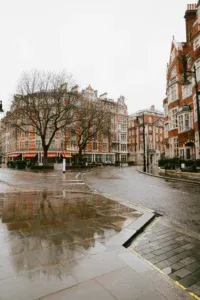
Mount Street: Red Brick and Arts and Crafts Influences
Moreover, walk along Mount Street. It stands out with its distinctive red-brick architecture. Architect Alfred Waterhouse extensively redeveloped this street in the late 19th century. Furthermore, his designs often featured terracotta details. They also incorporated Arts and Crafts influences. Additionally, the elaborate facades and decorative elements are striking. Therefore, Mount Street provides a unique and visually rich architectural experience.
Shepherd Market: Quaint Georgian Village
Finally, discover Shepherd Market. This charming area retains a quaint Georgian village feel. Furthermore, its narrow lanes and small squares offer a contrast to Mayfair’s grand avenues. Additionally, the buildings here typically feature modest Georgian brickwork. They have a more intimate scale. Consequently, Shepherd Market provides a delightful glimpse into Mayfair’s more rustic past.
Mayfair’s Architectural Story: A City Unfolds
In conclusion, Mayfair’s architecture tells a captivating story. It spans centuries of design and development. From Georgian grandeur to Victorian embellishments and Art Deco flourishes, the district is a living museum. This walking tour unveils the distinct styles. It reveals how they shaped Mayfair’s unique character.